
Road Traffic Accident
Have you been involved in a road traffic accident that wasn’t your fault?
Have you been involved in a road traffic accident that wasn't your fault?
It’s not uncommon to be involved in a road traffic accident (RTA) through no fault of your own. The effects of an RTA can be severe, both physically and emotionally, and the aftermath can be extremely stressful. You may be entitled to compensation if you’ve been involved in an RTA within the last 3 years.
Is there a time limit to claiming compensation for a road traffic accident claim?
To claim compensation for a road traffic accident, you must start your claim within 3 years of the date of the accident. This is known as the ‘limitation period’. The court will usually reject your case if you try to claim after this time.
If you were under 18 at the time of the accident, you have until your 21st birthday to start your claim. If claiming on behalf of someone who died, you have 3 years from their death to make a claim.
What types of road traffic accidents can I claim for?
The majority of accidents where you will be able to claim compensation for injury or loss fall within these categories:
- Car accidents
- Motorcycle accidents
- Pedestrian and cyclist accidents
- HGV and other commercial vehicle accidents
- Accidents involving uninsured or untraced drivers
- Accidents where you were the passenger
If you’ve been involved in any other type of road traffic accident that wasn’t your fault, you may still be able to claim compensation.

What compensation can I claim for an RTA?
Each accident is different, and as such, the amount of compensation you could receive will depend on the specific circumstances of your case. However, there are a few different types of damages that are commonly awarded in road traffic accident claims, which include:
- Loss of earnings incurred from missing work
- Future lost income (including predictions on the effects on your job prospect)
- Impacts on your ability to work
- Care costs, even if provided by family and friends
- Necessary home and vehicle modifications
- Travel expenses you have incurred while seeking treatment
- Specialist or private medical care that is required and not covered by the NHS
It’s easier to calculate the exact amount of compensation you could receive after knowing all the details of your case. Payments for similar injuries can vary significantly from case to case. However, our personal injury solicitors have a great deal of experience in dealing with road traffic accident claims and can give you an idea of the amount you could be entitled to.
Lorem ipsum dolor sit amet, consectetur adipiscing elit. Ut elit tellus, luctus nec ullamcorper mattis, pulvinar dapibus leo.
Do I have to go to court for an injury claim?
Not necessarily. Payments can sometimes be made on an interim basis before the case is settled to help with any immediate financial pressures you may be facing. In most cases, we can reach an agreement with the other side without needing a court appearance.
You can receive early compensation for certain types of losses, such as loss of earnings, known as ‘special damages’, in addition to the ‘general damages’ you may receive for your injuries, which cover the pain and suffering you have experienced.
Most road traffic accident claims are settled out of court. You won’t usually have to go to court to get the compensation you’re entitled to. Your solicitor will handle everything on your behalf, including liaising with the other side and negotiating a settlement.
If both parties cannot agree, your case will need to go to court. This is usually only necessary if the other side denies liability or disputes the amount of compensation you’re entitled to. In these cases, it’s essential to have a solicitor on your side who knows how to win in court.
Do I have to pay to make a road accident compensation claim?
We offer a no-win no-fee service known as a conditional fee agreement. You will only pay legal fees to us if you win your case. There are no hidden costs, and you will not be out of pocket, regardless of the outcome.
We do not deduct fees directly from your compensation, so be aware that the following fees do need to be paid:
- A 'success fee' is applicable on successful claims. This fee is applied to successful claims to cover the risk involved in taking each case.
- Other legal expenses or costs not otherwise recovered from the other side, such as legal expense insurance costs.
We arrange insurance protection for you when you make your claim. This insurance is referred to as ‘After the Event’ insurance and covers your legal expenses if your claim is denied. You do not pay for this insurance if your claim is rejected, but it is deducted from compensation if it is successful.
What should I do after an accident?
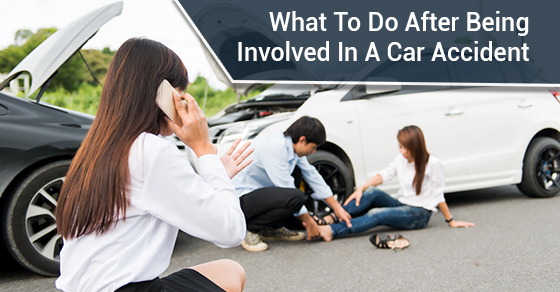
If you are involved in an accident, the first thing to do is ensure that you are safe and looked after. We advise that you:
- Move your vehicle to the side of the road if it is safe to do so.
- Turn off your engine
- Turn on your hazard lights
- Assess whether anyone is injured
- Call 999 if anyone is injured or the road is blocked
- Only leave the scene of an accident once all the necessary details have been exchanged, including names, addresses, contact details and insurance information
- If possible, take photographs of the accident scene
- Do not admit fault - this can be resolved by your insurers or solicitors
What details do I need to gather at the scene?
You should exchange the following details with the other driver:
- Full name
- Contact details
- Insurance details
- Registration number
- Make, model and colour of vehicle
- Gather the names and phone numbers of any witnesses
- If the incident is with a commercial vehicle, record the trailer registration, which may differ from the cab.
- Record the date and time, road and weather conditions, and lighting.
- Take photographs of the damage to both vehicles
- Note any CCTV present at the location
When should I call the police?
You should call the police if:
- The accident resulted in injury
- The accident resulted in a fatality
- The accident has resulted in damage to property other than the vehicles involved
- The driver who caused the accident refuses to give their name or address
- The driver who caused the accident does not have insurance, or you suspect they are under the influence of drugs or alcohol
- The other driver tries to leave the scene
- You believe the other party caused the accident deliberately
What is the process for making a Road traffic accident claim?
Claiming damages following an RTA can be a daunting task. Our experienced solicitors will take care of everything on your behalf, from liaising with the other side to negotiating a settlement. If both parties can’t reach an agreement, your case will need to go to court.
For RTA claims up to £25,000
Personal injury claims from £1,000 to £25,000 are generally dealt with as single-track or fast-track claims. In 2021, a new rule was introduced, meaning that these cases will now be dealt with in the small claims court if they relate to an injury rather than property damage.
The personal injury element of your claim will still be processed in the same way as before, but any compensation awarded will be lower than if your case had been handled on the multi-track.
For RTA claims over £25,000
More serious cases are dealt with on the multi-track. These claims can take longer to resolve and usually involve more paperwork than fast-track claims. These cases are dealt with more rigorously as they often result in life-altering or fatal consequences.
If the other side accepts liability for the RTA
The next step is to agree on the amount of compensation to be paid. The compensation is known as ‘quantum’ and will consider things like loss of earnings, medical expenses, and the pain and suffering caused by the accident. Once liability and quantum have been agreed upon, the liable party can pay out a settlement.
Around four weeks after the case settlement, we will receive payment from the insurance company, from which our costs are deducted, and the remainder is paid to you.
If the other side denies liability for the RTA
If the other side denies liability, we will investigate the accident and gather evidence to support your claim. Evidence may include witness statements, photos, and CCTV footage. Once we have gathered enough evidence to prove that the other driver was at fault, we will send a ‘Letter of Claim’ to their insurance company.
Most cases are settled out of court, but if the other side’s solicitors begin proceedings, your case will be transferred to the most suitable court track. It is a set process, with all the key dates and events set out by law. If the other side still denies liability, a trial will be held, and a judge will decide who is at fault and how much compensation should be paid.
Hit and Run or Uninsured Drivers
In the event of an uninsured driver, the Motor Insurance Bureau (MIB) will pay your compensation. The MIB is a not-for-profit organisation that exists to compensate victims of uninsured and untraced drivers.
Unsafe Road conditions
If your accident resulted from poor road conditions, you could claim against your local authority. This can be a complicated process, so it’s vital to seek legal advice as soon as possible.
Collision with livestock
If a pet or livestock caused your accident on the road, you could claim against the owner of the animals. The owner is legally responsible for keeping their animals contained, so you may be entitled to compensation if they have failed to do so.
You must report incidents involving certain animals to the police. Failure to do so is a criminal offence:
- Cows and cattle
- Dogs
- Donkeys and mules
- Goats
- Horses
- Pigs
- Sheep
As there are no owners for wild animals, such as deer, foxes, or badgers, there is no possibility of claiming damage following an incident involving them.
Can pedestrians/cyclists/motorcyclists make a claim?
Yes. You can still claim compensation if you have been involved in an accident while walking, cycling, or riding a motorcycle. The claims process is the same as for any other road traffic accident.
Request a call back
Use the form below to request a call back from one of our legally trained advisers.
Or call us now on 0330 223 6978